The Song of the Dodo
Why species vanish from islands
Description
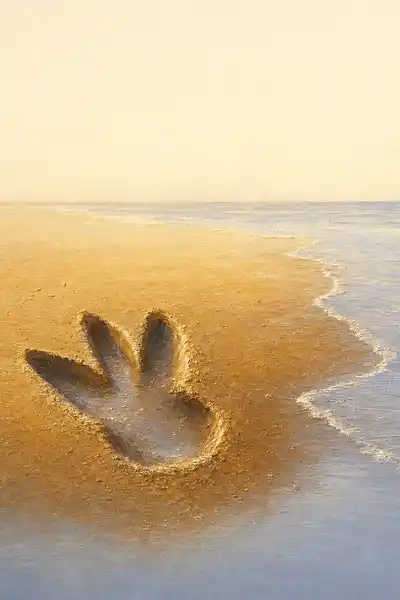
Sometime in the late seventeenth century, on a humid island in the Indian Ocean, the last dodo died. Nobody wrote down the date. Nobody heard a final song — the bird, a flightless, trusting, turkey-sized pigeon, had no song worth remembering. Mauritius had been the dodo's whole universe: no predators, no need to fly, no reason to fear the sailors who stepped ashore and found a creature that would waddle right up to them. Within roughly a century of humans arriving, it was gone. The dodo became the mascot of extinction, a punchline about stupidity. David Quammen, in his 1996 book The Song of the Dodo, wants us to see it as something else entirely: a clue.
The clue is this. Islands are where species go extinct. Not occasionally, not by bad luck, but reliably, disproportionately, as if the geometry of a place surrounded by water were itself a kind of sentence. Quammen spent years chasing this pattern across the globe — through the forests of Madagascar, the Amazon, the Aru Islands where Alfred Russel Wallace once collected birds of paradise — and following the naturalists who first noticed that isolation does strange things to life. It breeds giants and dwarfs, wingless birds and flightless insects, wonders found nowhere else. And then, with unnerving efficiency, it kills them off.
What turns this from natural history into something urgent is a single unsettling move. Quammen argues that we have begun cutting the whole planet into islands — chopping continuous forest into fragments, ringing wilderness with roads and farmland, leaving nature stranded on shrinking scraps of ground surrounded not by ocean but by us. If islands are where species vanish, and if we are manufacturing islands everywhere, then the fate of the dodo stops being a quaint tale from Mauritius. It becomes a forecast.
The question we’re asking : Why do islands, more than anywhere else on Earth, turn out to be the places where species disappear?What we’ll see : How a strange flightless pigeon led naturalists to a science of isolation — and why that science now reads like a warning about the world we are building.
Table of contents
01Chapter 1 — The strangest tame bird in the world
The dodo is the easy image, but Quammen quickly makes clear it was only one instance of a recurring islandmade oddity. Cut off from the mainland, evolution on islands drifts in peculiar directions. Predators are often absent, so defenses relax — birds forget how to fly, animals lose their fear. Resources are limited, so bodies rescale: elephants shrink to the size of ponies on some Mediterranean islands, while rodents and tortoises swell into giants. The results are marvelous and specific. A given island produces creatures that exist there and nowhere else on the planet, tuned to one small stage.
Mauritius was such a stage. The dodo had descended from pigeons that reached the island long ago and found no reason to keep their wings. It grew heavy, ground-nesting, unbothered. That worked perfectly until the world changed shape around it. Portuguese and then Dutch ships arrived in the sixteenth and seventeenth centuries, and with them came sailors, but also pigs, rats, monkeys and dogs — animals that ate eggs, ate chicks, competed for food. A bird built for a world without enemies had no answer.

02Chapter 2 — The naturalist who arrived second
Everyone knows Darwin and the Galápagos. Quammen's book restores a quieter figure to the story: Alfred Russel Wallace, the working-class naturalist who, collecting specimens across the Malay Archipelago in the 1850s, independently arrived at the theory of natural selection. It was Wallace's letter, sent from the far side of the world, that jolted Darwin into finally publishing. But Wallace's deeper obsession was geographical. Why, he kept asking, do particular animals live on particular islands and not others?
Roaming between islands separated by narrow straits, Wallace noticed something startling. On one side of a channel the wildlife was Asian in character; on the other, abruptly Australian. A line could be drawn — later named the Wallace Line in his honor — where the living world switched allegiance across a gap of open water no wider than the English Channel. Distribution was not random. It was written by isolation, by the barriers of sea and time that kept populations apart long enough to become distinct.
03Chapter 3 — The mathematics of a shrinking place
That mathematics arrived in the 1960s, with two young American scientists: the mathematically minded ecologist Robert MacArthur and the ambitious young naturalist Edward O. Wilson. Together they built what became the theory of island biogeography, published in 1967. Their central claim was almost brutally simple. The number of species an island can hold depends on a balance between immigration of new species arriving and extinction of those already there — and that balance is governed largely by two things: how big the island is, and how far it sits from a source of new colonists.
The consequences are precise. Bigger islands hold more species; smaller islands hold fewer. Remote islands receive fewer arrivals and lose species faster. From this came the relationship at the book's mathematical heart, sometimes called the species-area relationship: reduce an area, and you reduce the number of species it can sustain, in a predictable, roughly quantifiable way. Cut an island in half and you don't lose half its species immediately, but you have lowered the ceiling — and the surplus will bleed away over time.
04Chapter 4 — A world cut into islands
This is where The Song of the Dodo stops being about the dodo. Quammen argues that the great ecological event of our era is fragmentation — the breaking of continuous habitat into disconnected pieces. A national park ringed by ranches, a rainforest reserve bounded by soy fields, a wood split by a highway: each becomes, biologically, an island. It has an area and a degree of isolation. And so, according to a theory built for real islands, each will shed species until it reaches the smaller number its reduced size can hold. The parks we set aside to save nature are themselves islands losing their cargo.
To watch this happen in real time, Quammen visits an audacious study in the Brazilian Amazon, where researchers persuaded cattle ranchers to leave forest patches of measured sizes — some tiny, some large — standing amid the cleared land. The isolated fragments began to unravel almost at once. Certain birds vanished. Large predators, needing more room than any fragment offered, disappeared first, and their loss rippled downward through the food web. Edges dried out, winds tore in, and the interior forest changed character. The islands, freshly minted by chainsaw, started performing exactly as the theory predicted.
05Conclusion
The dodo left no song, but Quammen finds one anyway — in the pattern its death revealed. From Wallace crossing his invisible line, to MacArthur and Wilson's quiet arithmetic, to the raw forest fragments bleeding species in the Amazon, the book traces a single idea to its unsettling end: isolation and area govern the fate of everything alive, and we have become the makers of both. The bird that waddled up to Dutch sailors was not an oddity. It was an early, legible case of a process now unfolding across the planet.
Related books