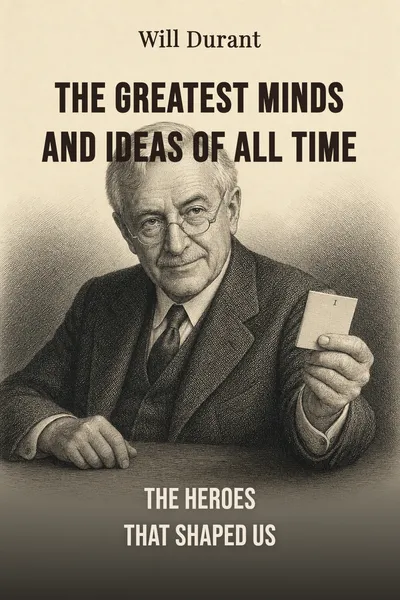
The Greatest Minds and Ideas of All Time
The heroes that shaped us
Description
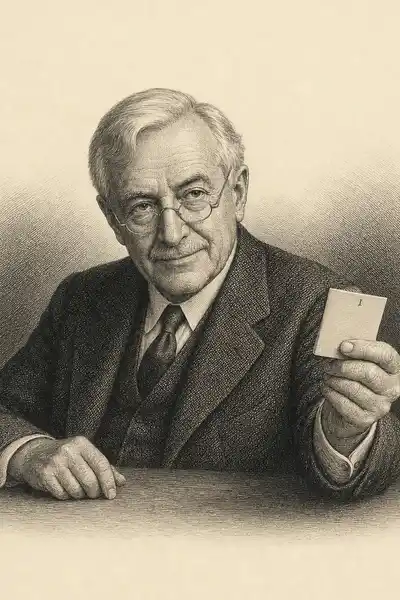
Will Durant was the kind of man who couldn't resist a list. Over a career that ran from the 1920s to his death in 1981, this former seminarian turned popular philosopher kept setting himself impossible parlor games and then answering them in full sentences. The hundred best books for an education. The ten greatest thinkers. The ten peaks of human progress. The ten greatest poets. He treated these as serious questions, not filler for a magazine, and he answered them with the confidence of a man who had actually read the shelf he was recommending. Decades later, an editor gathered these scattered verdicts into one slim volume, and what emerged was less an anthology than a portrait of a particular temperament: someone who believed you could hand another person a whole liberal education in the space of a pocket book.
The premise sounds almost quaint now, in an age suspicious of anyone ranking Plato against Aristotle or deciding which ten poets a civilization should keep. Who appointed Durant? By what right does one Brooklyn-born writer decide that Shakespeare edges out Homer, or that Voltaire belongs on the list and someone else does not? Durant knew the objection perfectly well. He made the choices anyway, and he made them not to close the argument but to start it, laying his cards on the table so a reader would have something firm to push against.
What holds the collection together is not the rankings themselves but the spirit behind them — an unfashionable, stubborn optimism about what human beings have made, and a conviction that this inheritance belongs to everyone, not just to universities. Durant wanted to pass the best of it forward, on purpose, before it was lost in the noise.
The question we’re asking : Why would a serious thinker spend a lifetime ranking the greatest minds and ideas, and what did he think we'd gain from his lists?What we’ll see : How Durant built his verdicts, the standards behind them, the names he chose, and the wager underneath the whole enterprise.
Table of contents
01Chapter 1 — The man who spent a lifetime making lists
Durant came to the ranking business honestly. Born in Massachusetts in 1885, he trained for the Catholic priesthood, lost the faith, and reinvented himself as a teacher who lectured working adults on philosophy in the evenings. His breakthrough, The Story of Philosophy in 1926, sold in numbers no philosophy book had any business reaching, and it did so because Durant refused to write for specialists. He wrote for the curious commuter, the self-taught reader, the person who had never been to college but wanted the ideas anyway. That audience shaped everything he did afterward, including the lists.
When Durant proposed the hundred best books for an education, or the ten greatest thinkers, he wasn't performing erudition. He was doing something closer to a favor. Imagine a friend who has read the whole library handing you a map: start here, then this, skip that, come back to the hard one when you're ready. The lists were a curriculum for people locked out of the official one. That's why he kept the tone conversational and the selections firm — a vague recommendation helps no one, but a confident one gives you a place to stand.

02Chapter 2 — What makes a mind great, in Durant's accounting
Behind the confidence sat a real question: greatest by what measure? Durant never pretended the standard was obvious. Fame won't do it, since fame is fickle and often rewards the loud over the deep. Influence alone won't do it either, because plenty of influential ideas have been catastrophic. Durant reached instead for something harder to pin down — the degree to which a mind enlarged what it meant to be human, added to the stock of understanding, and left the species better equipped to think and feel than it had been before.
For thinkers, that meant weighing not just originality but reach. A great mind, in his accounting, illuminated more than one corner. He prized the ones who connected fields, who saw a whole where others saw fragments. This is partly why he tended to favor the synthesizers and the humane generalists over the narrow technical geniuses, however brilliant the latter. Durant was himself a generalist by temperament, so the bias is understandable, and he was honest enough to let it show rather than hide it behind false neutrality.
03Chapter 3 — The books, the poets, the ten who mattered most
The lists themselves are where the pleasure and the provocation live. For the greatest thinkers, Durant assembled a lineup that ran from Confucius and Plato through Aristotle, and on to figures like Aquinas, Copernicus, Bacon, Newton, Voltaire, Kant, and Darwin. The shape of it tells you his priorities. He wanted the ones who reset how humanity saw the whole picture — the cosmos, the mind, the moral order — rather than those who perfected a single specialty. Voltaire earns his place less as a systematic philosopher than as a force who cleared ground for tolerance and free inquiry.
For poets he ranged wider than an English professor would dare, reaching past the usual Western shortlist to include voices from other traditions alongside Homer, Shakespeare, Dante, and the Romantics. Poetry, for Durant, was not decoration. It was one of the highest forms of thought — the place where a civilization stores its feeling, its grief, its ecstasy. To leave it off a map of the greatest minds would have struck him as a serious omission, a pretense that reason alone carries us.
04Chapter 4 — The Country of the Mind, and why he kept it open
Step back from the individual rankings and Durant's real subject comes into view. He called it the Country of the Mind — a place outside our own time and circumstances, where the great figures of every age go on thinking and singing, available to anyone who chooses to visit. The lists were never meant as final scorekeeping. They were invitations to emigrate, at least for a while, from the narrowness of one's own moment into a much larger company. That framing turns the whole exercise from gatekeeping into hospitality.
This is where his stubborn optimism becomes an argument rather than a mood. Durant lived through two world wars and the collapse of a great deal of confidence in progress, and he knew all the reasons to despair of the species. He chose instead to keep a ledger of what humanity had gotten right — the discoveries, the poems, the moral advances — and to hand that ledger forward. The lists are, at bottom, an act of faith that the best of us is worth preserving and can be transmitted to people who never asked for it in a lecture hall.
05Conclusion
The slim volume that gathered Durant's verdicts arrived long after most of them were written, and reading them together makes the man clearer than any single list could. Here was someone who spent a lifetime deciding what was worth keeping, not to win an argument but to pass something on. The rankings are the surface. Underneath is a teacher who trusted ordinary readers with the highest material, and who believed the reaching itself would do them good.
Related books