The Great Revolt
What the Trump voter wants next
Description
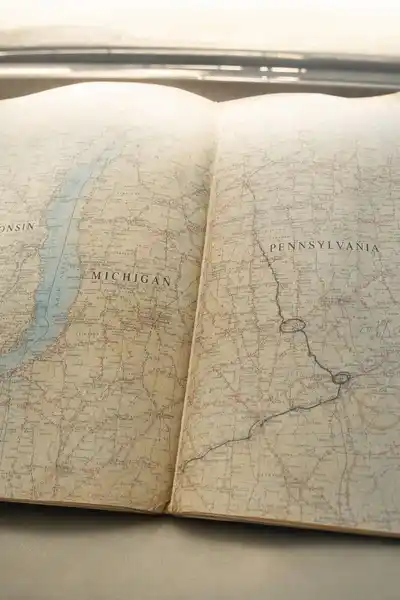
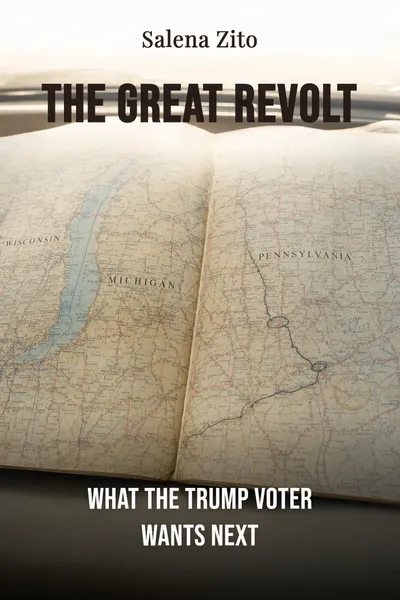
On the night of November 8, 2016, the maps that the networks had prepared came apart in real time. Michigan, Wisconsin, Pennsylvania — states that had voted Democratic in every presidential race since the 1980s — turned red, and the professional class of pollsters, consultants and reporters who had spent the year explaining why this could not happen were left explaining why it had. Into that gap stepped Salena Zito, a Pittsburgh-based reporter who had spent the campaign driving the back roads of the Rust Belt rather than reading the crosstabs, and Brad Todd, a Republican ad-maker who built campaigns for a living. Their book, published in 2018, carried a title that was also a thesis: The Great Revolt.
Their argument started with a complaint about how the story had been told. The dominant explanation of the Trump vote treated it as a spasm — angry, white, rural, economically stranded, easily reducible to a grievance and a hat. Zito had heard a version of this from the coasts all year and it never matched the people she actually talked to in the counties that flipped. Todd had the polling to test her hunch. Together they surveyed voters across five swing states and went looking for the ones who broke the pattern: the Obama voters who switched, the women who were supposed to be repelled, the comfortable suburbanites who were not supposed to need him.
The book is less interested in relitigating 2016 than in the question underneath it. If the coalition was real, and not an accident, then it had wants — and those wants would still be there after the ballots were counted. Zito and Todd set out to name them.
The question we’re asking : If the Trump vote was a coalition and not a fluke, what does that coalition actually want — and what does it want next?What we’ll see : How two reporters mapped the people the polls missed, the types they found, and the deeper allegiance holding them together.
Table of contents
01Chapter 1 — Middletown, not a mistake
Zito's reporting method was almost old-fashioned. Rather than sit in Washington and read the numbers, she drove — through southwestern Pennsylvania, across Ohio, into Michigan and Wisconsin — and she stopped in the towns that the national story had written off. Her governing instinct was that the coastal press had gotten the diagnosis backward. The famous line she coined during the campaign captured it: the media took Trump literally but not seriously, while his voters took him seriously but not literally. It sounds like a throwaway, but it does real work. It means the fact-checks that landed so hard in newsrooms slid right off the people they were meant to persuade.

02Chapter 2 — The seven types who made the coalition
The heart of the book is a taxonomy. Zito and Todd sort the coalition into seven archetypes, each built from the survey data and then illustrated by a real person the reporter met on the road. The move is deliberate: a type without a face is a statistic, and a face without a type is an anecdote. The book insists on both at once, so that no single portrait can be dismissed as unrepresentative and no chart can float free of an actual life.
There are the Red-Blooded and Blue-Collared — the union-household, historically Democratic workers who crossed over. There are Perot-istas, older independents who had been looking for an outsider since Ross Perot in 1992 and finally found one. There are the Rough Rebounders, people whose lives had absorbed a hard knock — bankruptcy, addiction in the family, a lost job — and who read Trump's own reversals of fortune as familiar rather than disqualifying. There are Girl Gun Power women, gun-owning and independent-minded, who scrambled the assumption that Trump had a fatal problem with female voters.
03Chapter 3 — The Roosevelt they still remember
If the seven types explain who showed up, the book still owes an account of what pulled them into the same tent. Zito and Todd find it in a memory older than any current grievance. Many of these voters, or their parents, came from families that had once been reliably Democratic — New Deal Democratic, Franklin Roosevelt Democratic — in the era when the party spoke to the person who worked with his hands and worried about the mill. Somewhere along the line, in their reading, the party stopped speaking that language and started speaking a different one, addressed to a different audience, in a vocabulary that made them feel like a problem to be solved rather than a constituency to be courted.
04Chapter 4 — Whether the coalition holds without the man
The book was written in the flush of the upset, and its boldest claim is also its most exposed: that what Zito and Todd documented was not a moment but a realignment — a durable shift in which working-class voters of the industrial Midwest become a Republican bloc the way they were once a Democratic one. If that is right, the wants they mapped will outlast any single candidate. If it is wrong, the coalition was a personality cult that dissolves when the personality leaves.
The authors clearly believe the former, and they marshal a case for it. The grievances they identify — condescension from elites, an economy that rewarded the coasts, a culture that treated their values as backward — are structural, not tied to one man's tweets. A candidate did not manufacture those feelings; he gave them a container. That logic suggests the container could be refilled by someone else, which is the real answer to the book's own question of what comes next: not a policy wish-list but a permanent demand to be taken seriously, addressed in plain language, and left alone by people who think they know better.
05Conclusion
The maps that broke on election night eventually got redrawn, and the counties Zito walked became the most studied real estate in American politics. What The Great Revolt did was refuse the easy shorthand — the angry white man, the economic anxiety, the grievance in a hat — and replace it with people who had names, jobs, churches and reasons. The seven types were the argument: not one revolt but several, converging on a single ballot line for reasons that only partly overlapped.