The Book of Life
365 days to freedom
Description
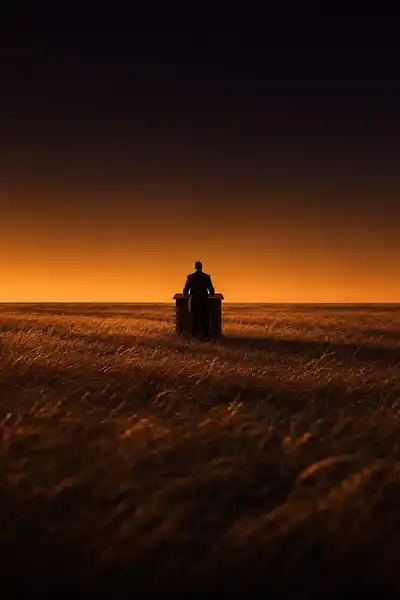
In 1929, at a gathering in the Netherlands, a young Indian man stood before thousands of followers who had been told for years that he was the coming World Teacher — and dissolved the organization built around him. "Truth is a pathless land," Jiddu Krishnamurti told them, and no organization, no belief, no teacher could lead anyone to it. He returned the money, disbanded the estates, and spent the next six decades talking to whoever would listen, in California, in India, in England, always refusing the role everyone kept trying to hand him. The man the Dalai Lama would later call one of the greatest thinkers of the age wanted, above all, not to be followed.
So there is a small irony in the shape of "The Book of Life," published in 1995, a decade after his death. It takes those decades of talks and arranges them into 365 entries — one for each day of the year, grouped loosely by theme across the seasons. A daily reader. The very format that self-improvement thrives on, applied to a body of thought whose central move was to demolish the idea that we can improve ourselves by following anything at all.
That tension is the book's live wire. A page a day sounds like a program, and Krishnamurti spent his life warning against programs. Yet read straight through, the entries keep circling the same handful of things — fear, desire, the mind's habit of collecting — and keep insisting that seeing them clearly, now, is the only change that matters.
The question we’re asking : Can a daily book of meditations deliver the very freedom its author said no method could ever hand us?What we’ll see : How Krishnamurti turns a year's worth of pages into a sustained argument against the self we keep trying to fix.
Table of contents
01Chapter 1 — A calendar with no doctrine
Open "The Book of Life" on any date and there is no lesson waiting, no step in a sequence, no exercise to complete before tomorrow. Each entry is a short passage drawn from a lecture or a dialogue, sometimes a paragraph, sometimes a single unfolding thought. The editor arranged them by loose theme — early months on listening and awareness, later stretches on fear, relationship, time, death — but Krishnamurti never wrote a word of it as a daily book. The talks came first, spread across continents and years; the calendar was assembled afterward from the wreckage of a life spent talking.
What strikes anyone expecting a self-help manual is how little the book offers to hold onto. There is no ladder. Krishnamurti refuses, almost aggressively, to give techniques. He will not tell us how to meditate in ten minutes, how to breathe, how to reframe a thought. When someone in one of these passages asks him for a method, he turns the question back: the very wanting of a method, he suggests, is the problem we came in with. A method promises a result, and a result belongs to the future, and the future is exactly where we hide from what is happening now.

02Chapter 2 — The trap of the accumulated self
At the center of nearly every entry sits one idea, worried at from a hundred directions: that what we call the self is mostly an accumulation. A pile of memories, hurts, ambitions, images of who we are and who we ought to become. We treat this pile as solid, as the thing that must be protected and improved. Krishnamurti keeps asking what would happen if we looked at it as what it is — a bundle of the past, running the present on autopilot.
Take fear, which the book returns to across dozens of days. We usually try to manage fear, to overcome it, to build courage against it. Krishnamurti does something stranger. He suggests fear exists only in relation to time — we are afraid of what happened before repeating, or of what might happen next. Sit with the fear itself, without the story of past and future wrapped around it, and it has nowhere to stand. The instruction, if it can even be called that, is to stop running from the thing and simply watch it, completely, without the observer who is trying to be rid of it.
03Chapter 3 — Attention is not concentration
If the book has anything resembling a practice, it is what Krishnamurti calls awareness or attention — and he spends real energy separating it from what most people mean by the word. Concentration, he says, is exclusion. We narrow the mind to a single point and shut the rest out, and the effort of shutting out is a kind of resistance, a fight. Whole entries push back against the popular image of the meditator forcing the mind quiet, because force, in his account, only produces a disciplined dullness dressed up as peace.
Attention is the opposite of that narrowing. It is a wide, choiceless watching — of a bird, of a passing thought, of the resentment rising during an argument — without naming it, without judging it, without trying to change it. The moment we judge, he points out, we are no longer looking; we are comparing what we see to what we think it should be, and the comparison is just the old accumulated self, back at the wheel. To watch without the watcher, without the running commentary of like and dislike, is the whole of it.
04Chapter 4 — A freedom that keeps no method
Step back from the individual days and the shape of the whole thing comes into focus — and it looks, deliberately, like a challenge to the entire genre it belongs to. "The Book of Life" is a daily reader that argues, page after page, against the logic of daily readers. The self-improvement shelf runs on a promise: follow this sequence, do the work, and a better version of you arrives at the end. Krishnamurti's writing takes that promise apart. There is no better version arriving, because the you that would arrive is the same accumulating machine that caused the trouble.
The freedom in the subtitle, then, is not freedom as achievement. It is not something earned over 365 days like fitness or a language. It is closer to a subtraction — freedom from the endless project of becoming, freedom from the future we keep postponing our lives into. And crucially, it cannot be handed over. This is the exact reason Krishnamurti dissolved his organization in 1929 and spent sixty years refusing disciples: the moment freedom becomes a teaching to be transmitted, it has already curdled into another authority, another belief, another cage with a kinder name.
05Conclusion
Krishnamurti died in 1986, having spent almost his entire adult life talking to crowds while insisting they should not need him. "The Book of Life" is the afterlife of that refusal — his words gathered by other hands into the neat calendar he would probably have distrusted. Read one page a day and the format quietly betrays him; read the year straight through and it doesn't, because what emerges is not a course but a single stubborn note held for twelve months. Look now. Stop becoming. See the fear, the desire, the accumulated self, without the effort to fix them.
Related books