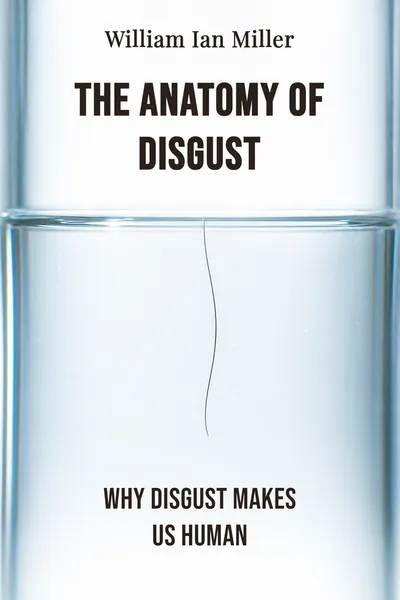
The Anatomy of Disgust
Why disgust makes us human
Description
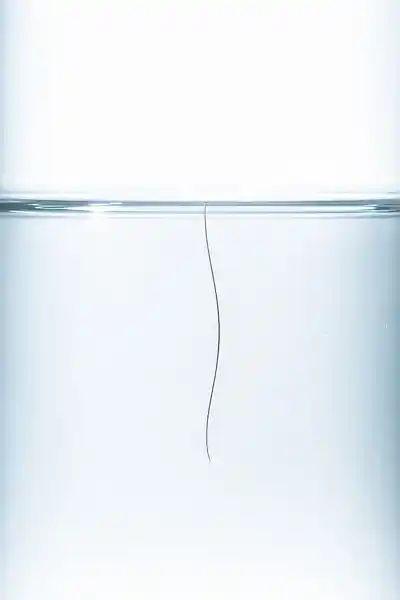
There is a short list of things almost nobody has to be taught to find revolting. A hair in the soup, once it was on someone's head, is fine; in the broth it becomes unbearable. Warm saliva sits in our mouths all day, yet the idea of spitting into a glass and drinking it back turns the stomach. A lover's body, an hour ago the object of desire, can in the wrong light suddenly seem a collection of leaking, oozing openings. These reactions feel primitive, almost beneath comment. William Ian Miller, a law professor at the University of Michigan, decided to dwell on them anyway, and in 1997 published a book that treats disgust with the seriousness usually reserved for grander feelings.
His wager is unfashionable. Where we tend to file disgust under the animal residue of our nature — a leftover reflex, faintly embarrassing, best overridden by reason — Miller argues it is one of the most culturally elaborate emotions we possess. It does not just protect us from spoiled meat. It draws the lines between us and them, high and low, sacred and profane. It underwrites our sense of having a self at all, because to have a self is to have a border, and disgust is the sentinel patrolling it. Strip disgust out of human life and much of what we call taste, decency, and even love would have nothing to push against.
That is the strange proposition at the center of Miller's book: that an emotion we associate with vomit and rot might also be the quiet engine of moral judgment, social ranking, and desire. The revulsion we feel at a rotting carcass and the contempt we feel at a betrayal share more machinery than we assume — which raises an uncomfortable thought about how much of our supposedly higher life is built on the queasy foundations of the lower one.
The question we’re asking : Why would an emotion built around filth and decay turn out to organize so much of our moral, social, and intimate lives?What we’ll see : How Miller traces disgust from the recoiling body up through hierarchy, love, and the moral sense — and why he thinks it makes us more human, not less.
Table of contents
01Chapter 1 — The emotion that keeps us at arm's length
Miller begins by taking disgust at its word. Unlike fear, which prepares us to flee, or anger, which pushes us toward confrontation, disgust is an emotion of recoil and rejection. It says, above all, this is too close, get it away. The characteristic gesture is the turned head, the curled lip, the involuntary retreat. Where anger wants to close the distance to its object, disgust wants to open it. And unlike many emotions, it comes with a strong sense of contamination: whatever disgusts us threatens to stick, to spread, to get inside. A single fly in the wine ruins the whole glass.
This gives disgust a peculiar relationship to the senses. It is the most bodily of emotions, keyed above all to touch and taste, then smell, then sight, with sound trailing behind. The very word carries taste at its root — dis-gust, bad taste in the mouth. What disgusts is what we imagine entering us, or having entered us: the thing swallowed, inhaled, or absorbed against our will. That is why the mouth is the emotion's central theater, and why images of eating, ingesting, and vomiting run through the whole vocabulary of revulsion.

02Chapter 2 — What the body knows before the mind does
The rawest material of disgust is the body itself — and, strangely, our own body above all others. Miller lingers on a fact we mostly refuse to notice: the things our bodies produce become disgusting the instant they leave us. Saliva in the mouth is nothing; spat out, it is vile. The same holds for mucus, sweat, urine, feces, menstrual blood. Inside, they are simply us. Outside, they are pollution — and evidence that the self is not the sealed, dignified thing we like to imagine but a leaky vessel constantly seeping at every orifice.
This is why Miller thinks disgust is so bound up with our sense of self. To feel disgust at our own secretions is to police the border of the body, to insist on the difference between the clean, contained person we present and the oozing organism underneath. Every wiped nose, every effort to control smell and residue is a small act of self-maintenance against the horror of dissolution. The body is always threatening to reveal itself as mere matter, and disgust is the alarm that fires when it does.
03Chapter 3 — Contempt, disgust, and the map of who ranks where
Here Miller makes his boldest turn: the disgust we feel at slime and rot is also, in transposed form, the disgust we feel at other people. Societies are ranked, and the language of ranking is soaked in the vocabulary of the low body. The despised are dirty, they stink, they crawl, they are vermin, filth, scum. These are not idle metaphors. Miller argues that hierarchies are enforced emotionally, and disgust is a primary enforcer — the feeling that lets those on top experience those below as literally beneath them, contaminating, not to be touched.
He draws a sharp line between disgust and contempt, its close cousin. Contempt can be cool and casual, the confident downward glance of the secure. Disgust is hotter and more anxious. And here Miller finds a striking asymmetry: the low can disgust the high, but they can also disgust upward. The vulgarity of the powerful, the smugness of elites, the rot at the top of a corrupt order — these provoke revulsion that runs against the social gradient. Disgust is not simply a weapon of the strong; it is available to anyone who wants to cast another as unclean.
04Chapter 4 — The moral sense that runs on revulsion
Step back and the deeper claim comes into view. Miller wants to rescue disgust from the assumption that it is merely the crude reflex of a squeamish animal, something reason should outgrow. On the contrary, he argues, disgust is one of the chief idioms in which we register moral failure. We do not merely disapprove of the traitor, the hypocrite, the bully, the cringing coward; we find them disgusting. The words we reach for are words of the low body — that behavior is sickening, it makes us want to vomit. Moral disgust is not a metaphor borrowed after the fact; it is the emotion doing real evaluative work.
This matters because a morality without disgust would be strangely thin. Aesthetics loses its recoil from the vulgar and the kitsch — the judgments by which we distinguish the fine from the cheap. Love loses its whole drama, since intimacy is precisely the overcoming of the disgust that bodies naturally provoke, and the erotic charge of sex comes largely from the licensed violation of exactly those prohibitions disgust erects elsewhere. And morality loses a crucial register of condemnation, reserved for evil and betrayal that mere disapproval cannot reach.
05Conclusion
We return, at the end, to the hair in the soup and the spat-out saliva — the small revulsions that seemed too trivial to think about. Miller's achievement is to show they are not trivial at all. The same faculty that curls the lip at the hair also curls it at the traitor and the tyrant; the same instinct that guards the mouth guards the boundaries of the self, the group, and the moral order. Disgust reaches from the gut all the way up to our loftiest judgments, using the same vocabulary at every level: the clean and the filthy, the whole and the decayed, what we keep in and what we cast out.
Related books