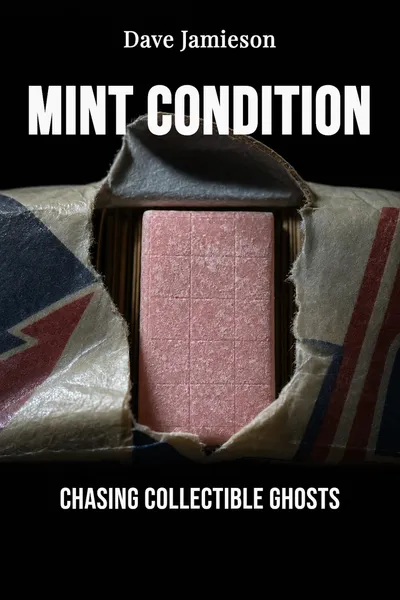
Mint Condition
Chasing collectible ghosts
Description
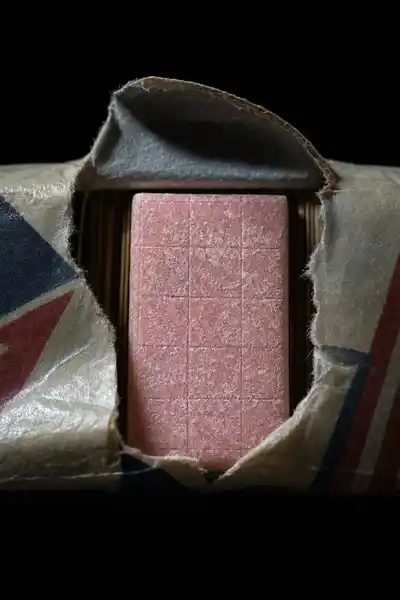
In the early 1990s, an American kid could walk into a corner store, hand over a dollar, and walk out with a wax pack of baseball cards and a flat stick of gum that tasted faintly of cardboard. The gum was the point, once. The cards were the throw-in. For most of the twentieth century, that was the deal: a piece of chewing tobacco or bubble gum came with a picture of a ballplayer, and the picture was there to move the product. Nobody's mother saved them. That is exactly why the ones that survived are worth what they are.
Dave Jamieson grew up in that world, and years later, sorting through the shoebox of cards he'd hoarded as a boy, he made the discovery that opens his book "Mint Condition": the collection he'd been sure would fund his retirement was worth almost nothing. Millions of other kids had saved the exact same cards, at the exact same time, in the exact same protective sleeves. The very care that was supposed to preserve their value had destroyed it. He went looking for how that happened — how a scrap of cardboard designed to sell gum became a speculative asset, then a bubble, then a cautionary tale.
The trail runs through tobacco marketing, a candy company's factory in Brooklyn, a generation of grown men who turned nostalgia into a trading floor, and a cottage industry of forgers who followed the cash. It is a story about sport only on the surface. Underneath, it is about how we decide that an object matters, and what happens to that decision when enough people make it at the same time.
The question we’re asking : How did a piece of cardboard packaged with chewing gum turn into a multi-billion-dollar market — and then collapse under its own weight?What we’ll see : How the collectible was born, monetized, faked, and finally undone by the very people who loved it most.
Table of contents
01Chapter 1 — The penny that used to come with gum
The baseball card did not begin as a collectible. It began as an advertisement. In the 1880s, tobacco companies slipped stiffened cards into packs of cigarettes, partly to protect the fragile product and partly to sell it. Ballplayers, actors, and pin-up girls were printed on the backing, and the most famous of these — a card of Pittsburgh shortstop Honus Wagner, issued around 1909 — became legendary less for the man than for its scarcity. Wagner, the story goes, had his image pulled from circulation, leaving only a handful in existence. That accident of supply, more than anything Wagner did on the field, is what would later make the card the most coveted object in the hobby.
Jamieson traces how the cards migrated from tobacco to candy. After the First World War, gum makers took over, and by the 1930s a company called Goudey was pairing cards with slabs of gum aimed squarely at children. The Second World War interrupted everything — paper and rubber were rationed — but the pairing survived it. The card was still a promotional gimmick, a reason to buy the gum. The kids who tore open the packs were the customers. The players on the cards had no say and, for decades, saw none of the money.

02Chapter 2 — How a hobby became a market
For most of its life, card collecting was a children's pastime, and the market for old cards ran through swap meets, hobby newsletters, and the classified ads at the back of magazines. Then the children grew up. By the 1970s and 1980s, a generation of adult men — many of them affluent, most of them nostalgic for a boyhood they now had the disposable income to reclaim — began treating the cardboard of their youth as something to buy, hold, and flip. Jamieson watches the hobby harden into an industry: price guides appeared, dealers set up shop, and a card stopped being a memento and started being a quote.
The pivotal move was standardizing quality. A card's worth had always depended on condition — sharp corners, centered image, no creases — but those judgments were subjective, and subjectivity is bad for a market. In the early 1990s, grading companies stepped in to score cards on a numerical scale and seal them in tamper-proof plastic slabs. Suddenly a card wasn't just a Mantle; it was a Mantle graded 8 out of 10, entombed and certified, its value pinned to a number. Grading turned a fuzzy sentimental object into a tradable, comparable commodity, and the price gaps between a 7 and a 9 grew into small fortunes.
03Chapter 3 — The forgers who followed the money
Where valuations climb, forgery follows, and Jamieson devotes some of his sharpest reporting to the underside of the memorabilia trade. Once a signed ball or a graded card could fetch thousands, the incentive to fake one became irresistible. The problem was worst in autographs, an area even harder to verify than cards. A signature is a few strokes of ink; a convincing counterfeit is a modest afternoon's work for someone with a steady hand and a supply of period-appropriate balls, photos, and jerseys.
The book follows the thread to Operation Bullpen, a federal investigation in the late 1990s that exposed a sprawling ring of forgers who had flooded the market with fake autographs of the biggest names in sports. Investigators estimated the fraud ran into the hundreds of millions of dollars, with a startling share of the "signed" memorabilia in circulation turning out to be counterfeit. The forgers weren't fringe hustlers; they operated at scale, with distribution networks and forged certificates of authenticity to match. The paper that was supposed to guarantee a signature was as easy to fake as the signature itself.
04Chapter 4 — When everyone kept everything
Step back from the auction houses and the forgers, and the baseball card turns out to be a near-perfect case study in how scarcity actually works. A collectible is valuable not because it is beautiful or useful, but because it is rare — and rarity, Jamieson shows, is almost never designed. The Wagner card, the 1952 Mantle, the cards worth chasing were all made in the millions and are precious only because most of them were chewed over, traded away, thrown out, or lost. Their value is a monument to carelessness. It exists in proportion to how little anyone tried to preserve them.
Which is why the boom contained the seed of its own collapse. The moment collecting became a recognized way to make money, the essential ingredient evaporated. Kids of the 1980s and 1990s didn't fold their cards into bicycle spokes; they slid them into rigid sleeves and stacked them in climate-controlled boxes, convinced they were curating an inheritance. The manufacturers, meanwhile, printed astronomical quantities to meet the demand. A collectible that everyone collects, and that everyone preserves, is no longer scarce. It is merely common in nice condition.
05Conclusion
Jamieson opens with his own shoebox and its crushing disappointment, and by the end that anticlimax reads less like bad luck than like the inevitable outcome of a market that ate itself. The Wagner card still commands millions, and a pristine Mantle can still stun an auction room, precisely because they belong to an era when nobody thought to save them. The cards of Jamieson's own childhood are worthless for the opposite reason: everyone did. The hobby's golden objects and its junk wax obey the same law, running in opposite directions.
Related books