City of the Century
Chicago's rise: order versus chaos
Description
In the early 1830s, the settlement that would become Chicago was barely a settlement at all. A muddy trading post at the mouth of a sluggish river, hemmed by prairie and marsh, it held a few hundred people and no obvious reason to hold more. The land was so waterlogged that wagons sank to their axles; travelers joked about the signs reading "No Bottom Here." Nobody looking at it in 1833 would have called it the future capital of American ambition. And yet, within seven decades, it would house nearly two million people and dazzle the world at a fair built on filled-in swamp.
The speed is the thing that still stuns. Donald L. Miller's account traces a city that went from fur-trading outpost to industrial colossus in a single lifetime — fast enough that men who arrived as young clerks died as titans in a metropolis they no longer recognized. Chicago didn't grow the way older cities grew, by slow accretion. It erupted. Grain, lumber, cattle, steel, railroads and money poured through it, and with them came the fires, the epidemics, the labor wars and the raw human churn of a place inventing itself in real time.
What makes the story more than a chronicle of bigness is the friction running underneath it. Chicago was, from the start, a fight between two forces that never quite reconciled — the drive to build without limit and the need to hold the whole thing together. It's the American story, told early and told loud, in a place that had to solve problems no city had faced before because no city had ever moved this fast.
The question we’re asking : How did a swamp become one of the most alive cities on earth in barely seventy years — and at what cost?What we’ll see : A raw settlement remade by engineering, catastrophe, money and an unresolved fight between order and freedom.
Table of contents
01Chapter 1 — A swamp with a future
Chicago's one asset was its location. It sat at a narrow divide between the Great Lakes and the Mississippi watershed — the spot where, with a modest canal, goods could move from the Atlantic seaboard all the way to the Gulf of Mexico. That geographic accident is what turned a marsh into a wager. When the Illinois and Michigan Canal was authorized and land speculation caught fire in the 1830s, lots that had sold for a few dollars were changing hands for thousands within a couple of years. The town was being priced as a future long before it was a present.
The people who came were young, unattached and hungry. Miller's Chicago is not built by aristocrats but by clerks, drovers, carpenters and grain traders who arrived with almost nothing and improvised an economy out of the continent's raw materials. The prairie behind the city produced wheat; the northern forests produced lumber; the plains produced cattle and hogs. Chicago's genius was to become the place where all of it was gathered, graded, priced and shipped east. It sold the middle of the country to the rest of the world.

02Chapter 2 — The engineers who lifted a city out of the mud
The swamp took its revenge in the form of disease. With no drainage, the streets became open sewers, and cholera and dysentery swept through the population in the 1850s with murderous regularity. The problem was not ignorance — the city knew it needed sewers — but physics. You cannot drain water downhill when there is no downhill. Chicago sat too low and too flat, and the lake it depended on for drinking water was also where its filth ended up. The city was slowly poisoning itself.
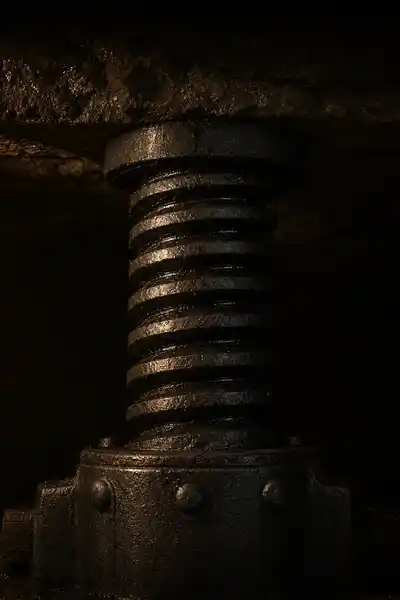
The response was one of the boldest pieces of civil engineering in the nineteenth century: they decided to raise the city. Rather than dig down, which the water table forbade, Chicago would build up. Engineers installed drainage and then jacked entire streets, and eventually entire buildings, several feet into the air, packing fill underneath. A young contractor named George Pullman made his early name lifting a full city block of brick buildings on thousands of jackscrews without cracking the plaster or interrupting business inside. Hotels rose while guests slept in their rooms.
03Chapter 3 — The fire that cleared the ground
In October 1871, after a dry summer, fire broke out in a barn on the West Side and found a city built almost entirely of wood. Chicago had thrown itself up so fast that its sidewalks, streets and most of its buildings were timber, cured to tinder by drought. The blaze jumped the river, outran every attempt to stop it, and burned for roughly a day and a half. When it finished, a swath of the city several miles long lay in ash, hundreds were dead, and something like a hundred thousand people — a third of the population — had lost their homes.
What happened next is the part that reveals the city's character. Chicago did not mourn for long. Within days, businessmen were announcing they would rebuild bigger; within a year, the downtown was rising again at a speed that astonished visitors. The fire, terrible as it was, functioned as a clearance. It wiped out the flimsy wooden core and opened ground for something more permanent, more monumental, and — crucially — more profitable to build.
04Chapter 4 — Everything at once, all the time
What Chicago really invented, in Miller's telling, was the modern American city — the first place where the full machinery of industrial capitalism ran without brakes and without precedent. The stockyards processed animals on a scale that horrified and fascinated the world, an assembly line of slaughter that Henry Ford would later credit as inspiration. Fortunes of a size the country had never seen accumulated in a few hands — Pullman, Field, Armour, McCormick — while the workers who made those fortunes lived in conditions that produced some of the fiercest labor conflicts in American history, from the Haymarket bombing of 1886 to the Pullman strike of 1894.
This is where the book's central tension comes fully into view. Chicago was proof of what unregulated growth could achieve, and simultaneously proof of what it cost. The same drive that raised the skyline crushed the men who riveted it. The same market genius that fed a continent also left neighborhoods in squalor and turned politics into a spoils system as raucous and corrupt as any in the country. Freedom and order, capitalism and community, were not abstractions here; they were fighting in the streets.
05Conclusion
The muddy trading post of the 1830s became, by 1900, one of the most explosively alive cities on earth — nearly two million people, a skyline the world came to study, a river running backward, a fair built on reclaimed swamp. Chicago got there by refusing every limit its ground tried to impose, and by tolerating a level of chaos, corruption and human cost that a slower city might never have survived. The speed was the achievement and the wound, inseparable.
Related books